

Description
Does your child struggle to form emotional connections or experience positive emotions? Does it seem that your child rarely feels remorse, guilt or regret? How about shame? Your child may have some elements of Reactive Attachment Disorder.
Reactive Attachment Disorder happens to us and to our brains when we experience early, repeated loss, alarmed aloneness and harm, especially in relationship with our closest people. What are the circumstances in which Reactive Attachment (the condition in which attachment relationships with others are very difficult) is formed? What does Reactive Attachment look like in children, and what does it look like in adults? How can resonance be of support?
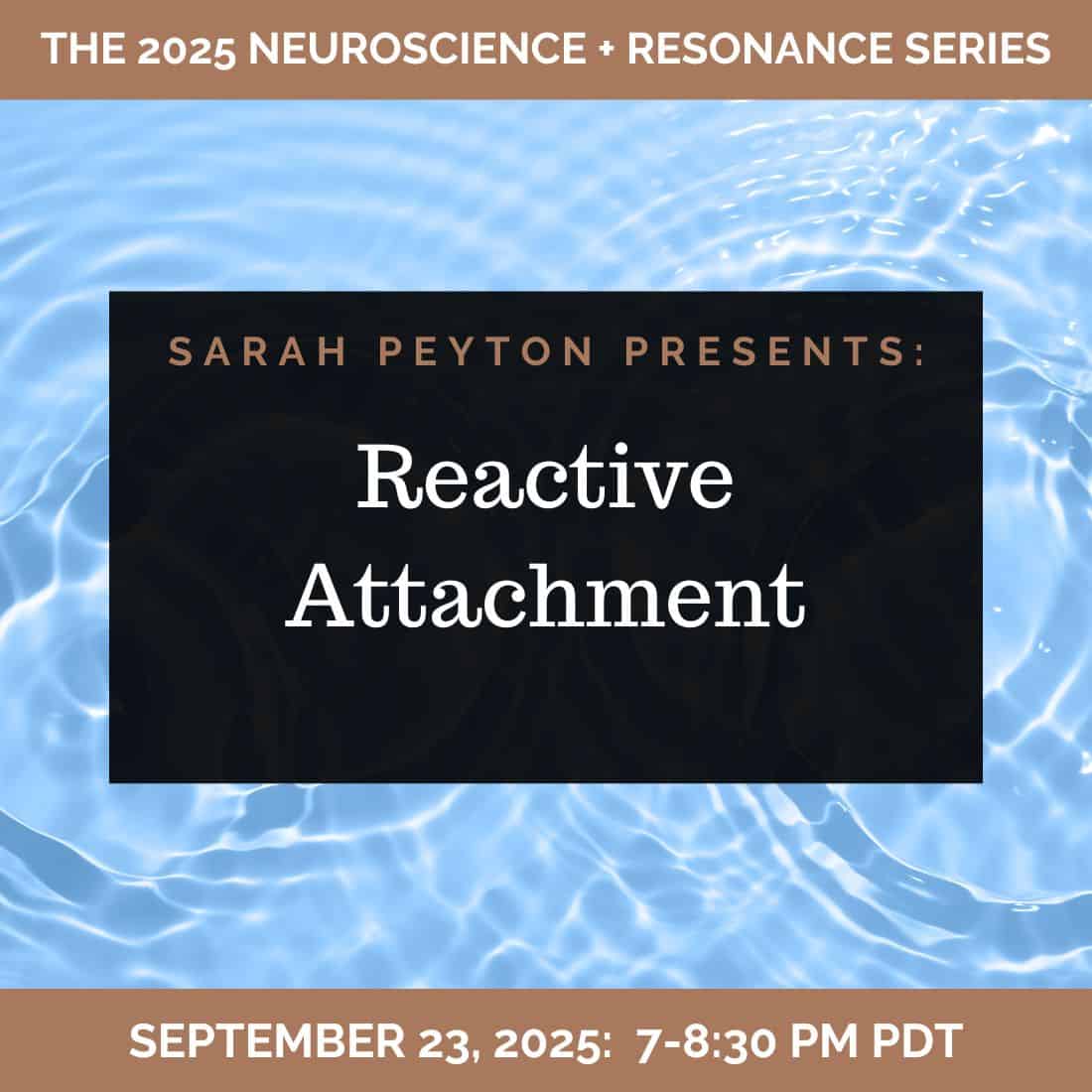
Join Sarah Peyton for 90-minute webinar that will help you understand and differentiate reactive attachment from other effects of early trauma, and learn how resonance can hold parents and bring some ease to children.
Please Note:
- This pre-recorded webinar includes 90 minutes of content followed by some Q+A.
- Purchase includes access to the recording + slides, including research citations when relevant.
- This webinar was part of Sarah’s 2025 Neuroscience and Resonance monthly series. Purchase access to the full series for all of the webinars at a discounted price.