sarah peyton presents
Resonance Basics
5 Courses, each offered once a year, exploring the foundations of resonant language

A year of skill-building and practice for brand-new beginners, returning learners, and anyone who has experienced a glimpse of resonance and is ready to connect and heal with others.
This yearlong package includes all four of our 8-week Resonance Basics courses — woven together into an immersive journey into the heart of resonant healing.
Together, these courses offer a layered, accessible pathway into relational neuroscience, resonant language, and healing practice. You’ll build skills over time, deepening your capacity for presence, self-warmth, and connection with others — all within a supportive community of fellow learners.
Whether you move through the full sequence continuously or one course at a time, this program offers a flexible structure designed to meet you where you are.
What You'll Learn
Language That Connects
April 15 – June 3, 2026
The practices of Resonant Language support us in connecting our physical sensations and language, in order to support us in being more fully in our integrity when we are in dialogue with others. Through deep attention to the words we use, and how those words impact the emotional states of our brains and bodies, we can begin to free ourselves from our own learned behavioral patterns.
Resonant Language is a practice in precision: precision in our language, as well as precision in our relationship with our bodies and environments. This practice, of paying warm attention to ourselves and our loved ones, has the power to radically change our lives.
Sarah Peyton has developed nine types of Resonant Language, all of which support us in our quests for connection, mutual understanding, care, and emotional nourishment. In this 8-week course, you will begin to build a solid foundation of Resonant Language skill, in order to create a more gentle and understanding relationship with yourself and others. This practice leads to the embodied changes of a kinder brain, the impacts of which ripple out to all corners of our lives and relationships.
In each 85-minute class, Sarah Peyton and Jaya Manske will present and make connections across the most cutting edge relational neuroscience research into how language and the brain interact, and participants will practice these skills in Resonant Language breakouts. There will be support for all students to create and develop Resonant Practice Partnerships outside of class.
Untying the Knots of Trauma
Next: June – August 2026
Are you burdened by difficult memories that unexpectedly resurface at the most inconvenient times? Do you feel reactive with anger or grief arising suddenly, interrupting your day? Or perhaps your day starts off well, only to be disrupted by waves of shame, grief, heartbreak, or pain from the past? Do you feel like you’re navigating through life, constantly on edge, as memories snap at you like alligators?
Developmental trauma, harmful relationships, adverse childhood experiences all contribute to us struggling to move toward the life we want, and can make our life a living hell. When we turn toward our past selves with resonance and compassion, the painful past will melt and change, freeing life energy that has been frozen in place for years, even decades.
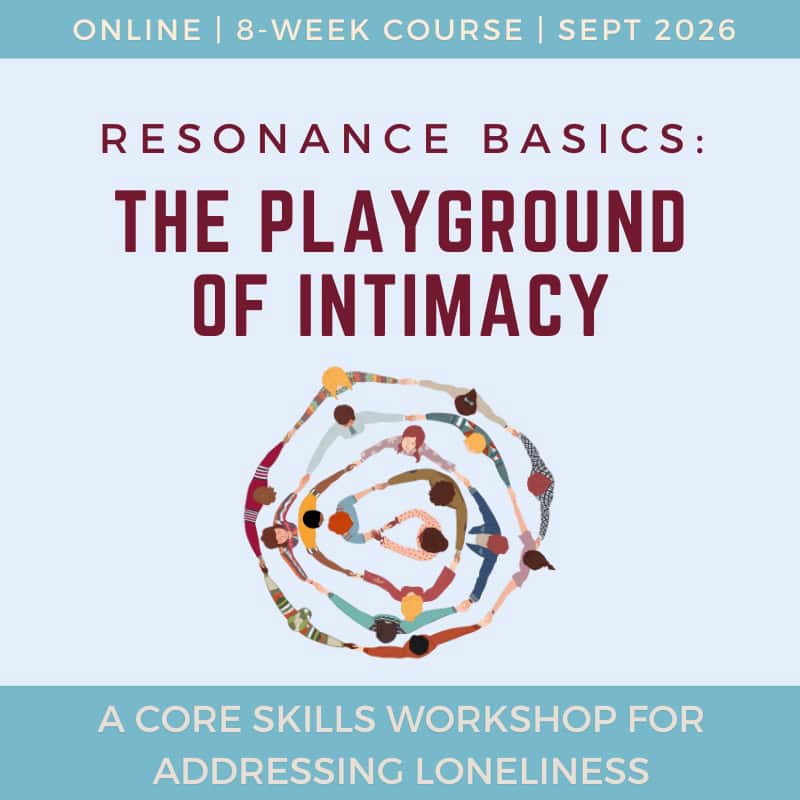
The Playground of Intimacy
Next: September 2026
Why is it so hard to access resonance in the moments that matter most?
The answer lies in intimacy. Resonance is not just a technique, it’s an act of closeness. And as soon as we enter the territory of closeness, we’re entering the mysterious world of attachment patterns. Shaped by early relationships and experiences, these patterns predict how we engage with others, how we protect ourselves, what we expect to receive and how we respond to emotional connection. These patterns are so profound that they even show up in our relationships with our companion animals. With this new class, the third in our Foundations of Resonant Healing series, you are invited to go beyond the building blocks of resonant skills and into the molecular structure of relational connection.
We will begin with one of the most deceptively simple and profoundly complex skills in resonance: attunement. What does it mean to give another person our full attention without becoming consumed by them, or needing to retreat in order to protect ourselves? We’ll learn the difference between emotional contagion and attunement, and name and release contracts of infancy which cause us to devote our nervous systems to the wellbeing of others and the balancing of entire systems and groups. We will look at the habits of mind that habitually stop us from connecting, and begin to lift the burden of attachment contracts that make us behave in ways that separate us, rather than allow us to fluidly move in and out of relationships as we choose. And we will learn about the circuits of emotion and motivation in the brain, in order to deepen our understanding of the ways that our contracts to limit emotion also inhibit resonance.
By the end of this workshop, you’ll leave with a deeper understanding of your own attachment landscape, greater affection for yourself, and a softened inner world. You’ll build your capacity to move fluidly into and out of connection rooted not in survival, but in choice.
Disrupting the Inner Critic
Next: November 2026
There are many healing modalities out there that encourage us to suppress or overpower this voice–but as we learn in Resonance, anything that we try to squash or reject only ends up popping up somewhere else with the same message. And it makes sense that repression wouldn’t change anything, given that this inner critic is a natural expression of a human brain that’s been left alone too often and that has had to struggle in a world without warmth. Suprisingly, this inner critic is our brain’s best attempt to try to take care of us, to try to find and create rules and procedures that will compensate for our missing relationships.
When we understand the inner critic through this lens–that it is a part of our brain that is trying to tie everything together and make sense of our lives–we can begin to unlock self-compassion and kind accompaniment for the parts of ourselves that have been unsupported. And we can begin to grow a distance from the authority of the inner critic’s voice, and understand that it is simply one strand in the larger tapestry of our internal world, and even transform the voice into one that is much more gentle and warm. When we can become bigger than our inner critic, we can shift the perspective and scope of the part of ourselves that is talking and the part of ourselves that is answering. We are able to transcend the inner critic’s sense of absolute authority, while also hearing its pleas with warmth and resonance. As though we are a warm abundant mother holding a cranky child in our arms, saying “of course!” with matching energy, and then soothing it while it cries. We do not seek to reject this child, but instead meet it with warmth and listen beneath its criticisms for its deep longings. We allow it to be one voice in a chorus of voices and allow it to inform us in radically new ways.
In this course, we will work with the tools of Resonance in order to build our brain’s capacity to become bigger and more securely attached to a sense of delightful self. We will learn the neuroscience of the Default Mode Network and the landscape of the brain’s hemispheres, in order to more fully understand how the inner critic gets created and how it is able to maintain so much authority within us. We will work with unconscious contracts, time travel, and Resonant Language to disrupt the critic’s power over us, restore a healthy sense of balance within our internal monologue, and create a foundation of inner warmth that will grow over time.
The more our inner critics transform into kind, warm voices, the more our immune system functioning increases. Working in this way with our inner critics allows our internal systems to move from paralysis to mobilization, and supports making our brains good, easy, and comfortable places to live.
Healing Our Emotional Circuits
Next: January 2027
When we become acquainted with all of our emotional experiences, and even grow affectionate toward them, we gain access to self-confidence, clarity of meaning, and a steady sense of our own truth. We become able to set boundaries that protect us and create the kind of internal landscape we want to live in.
For many of us, trauma and the impact of early relationships have entangled these circuits. For example, someone who laughs whenever they are afraid or someone who cries when they are angry is showing a brain whose pathways have become crossed in the effort to survive. Fortunately, these entanglements are not permanent. Through resonance, unconscious contract work, and time-travel accompaniment, the circuits can begin to unhook from one another and return to their original clarity, giving us a freer experience of being alive.
For the many of us who have lived without resonance, we may try to suppress all our circuits at once—leading to depression, anxiety, or collapse. Or we may over-rely on one circuit, such as letting rage become our sole guiding light, because the others have not been welcomed enough to participate. With the healing work of resonance, we gradually befriend each emotional energy as a source of vitality and meaning. None of our emotions remain frightening or off-limits; instead, each becomes a messenger offering essential information about what we want and what is true for us.
About the Instructors
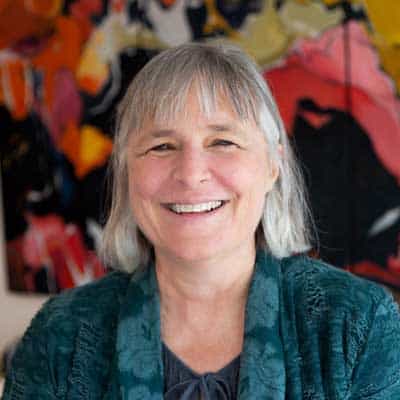
Sarah Peyton, Certified Trainer of Nonviolent Communication and neuroscience educator, integrates brain science and the use of resonant language to heal personal and collective trauma with exquisite gentleness.
Sarah is a sought-after expert who brings neuroscience expertise together with depth work, self-compassion, and the transformative potential of language. She works with audiences internationally to create a compassionate understanding of the effects of relational trauma on the brain, and teaches people how words change and heal us.
Sarah teaches and lectures internationally and is the author of four books on relational neuroscience and self-compassion: Your Resonant Self: Guided Meditations and Exercises to Engage Your Brain’s Capacity for Healing, the companion Your Resonant Self Workbook: From Self-sabotage to Self-care, and Affirmations for Turbulent Times: Resonant Words to Soothe Body and Mind, and The Antiracist Heart: A Self-Compassion and Activism Handbook, co-authored alongside Roxy Manning, PhD.
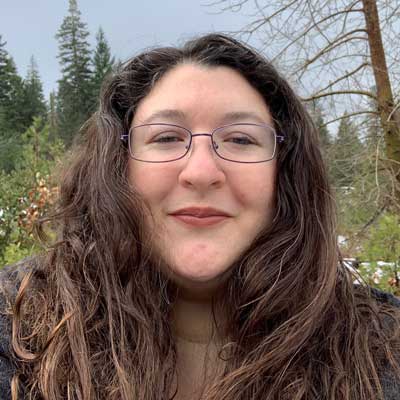
Jaya Manske is a transformative healing-centered coach and resonant healing practitioner with a passion for supporting people to cultivate kindness, compassion and gentleness for themselves and reconnect to their wholeness and mattering. She has been an empathetic practitioner since 2001 and is a member of Sarah’s team.
A former educator with a degree focused on developmental theory, Jaya has an in-depth background in attachment theory and how resonance transforms our ability to be in a kinder relationship with ourselves and others.
Informed by developmental theory, relational neuroscience, and the ways trauma impacts the brain and nervous system, Jaya offers resonant empathy, unconscious contracts/sacred vow work, time travel empathy, and is a certified mindfulness and wellness coach.