
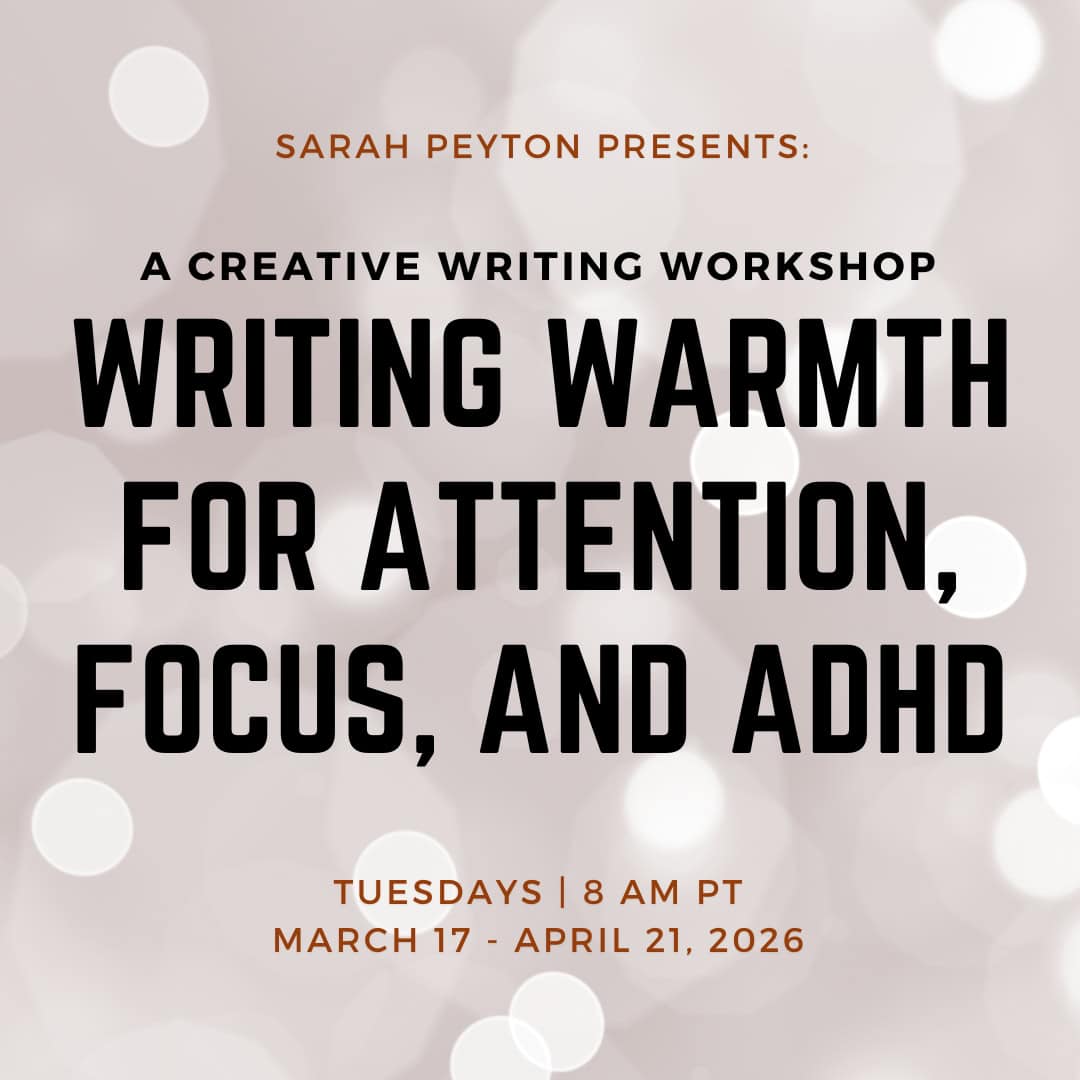
Writing Warmth for Attention, Focus, and ADHD
March 17 @ 8:00 am - April 21 @ 9:25 am PDT
About the Event

Do you hold a sincere intention to get something done, only to feel your attention fracture under the pull of too many competing demands? Do you find yourself overwhelmed by choice, as though you’re walking twenty paths at once instead of one? Do memories of trauma—or a history of being misunderstood—sometimes disrupt your ability to direct your energy toward what matters most?
Would it feel meaningful to have acknowledgment for how hard everyday tasks can be? Have you been told—explicitly or implicitly—that you are wrong, lazy, or bad for the way your mind naturally works?
Many people with attentional differences experience time in unusual ways. You may find yourself slipping into hyperfocus, hours disappearing without notice. Or you may struggle to sense time as it passes, leading to tension in relationships, work, and self-trust. In a world that rewards narrow focus and constant productivity, these differences are often treated as failures rather than signals of a nervous system shaped by stress, trauma, ancestry, or neurodivergence.
Attentional difficulties are not all the same. Sometimes they arise in response to danger or chaos. Sometimes they emerge when too many internal voices are asking for care at once. And sometimes they are rooted in genetics or early relational experiences that shaped how the brain learned to stay safe. For many people with ADHD (or those who resonate with attentional challenges but have never been formally named) attention is not broken, but contextual.
When we grow up being told that our way of focusing is wrong, a harsh inner critic often develops. Over time, this self-critical voice becomes part of the struggle itself, compounding difficulty with shame, doubt, and exhaustion.
In this course, we will gently dismantle the authority of the negative inner voice and cultivate a resonant self-witness: an inner presence that accompanies us with warmth, clarity, and understanding. This is not about forcing reassurance or “fixing” ourselves, but about discovering a grounded sense that we make sense. As we learn to link our frustration to our best qualities—our love of flow, integrity, partnership, and creativity—the nervous system begins to settle. Emotional regulation becomes more possible, and forward movement no longer has to be driven by fear or self-attack.
As attention softens and self-trust grows, creativity and follow-through naturally re-emerge. Over the course of this six week class, participants will explore nervous-system-informed tools for working with attention, time, and self-criticism, while reconnecting with their innate gifts and ways of contributing. Participants will leave with increased self-compassion, practical supports for navigating focus and overwhelm, and a renewed sense of confidence in their capacity to act, create, and move through the world with integrity.
Cost and How to Register
*PLEASE NOTE:
- Your tuition payment is non-refundable (but it is transferable).
- The course will be recorded for those who want to learn asynchronously for some or all sessions.
- This work is not therapy and is not a substitute for therapy. If you have a sense that you would be destabilized by yourself or others speaking about difficult events, then this event may not be for you. While we hope that the processes and information that we share can be of use in your journey, we do not have the resources to support extreme psychological difficulties.
Price range: $175.00 through $400.00
If you have questions or need support, please email help@sarahpeyton.com
About Sarah
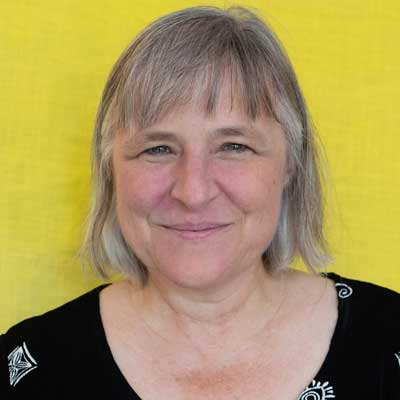
Sarah Peyton, Certified Trainer of Nonviolent Communication and neuroscience educator, integrates brain science and the use of resonant language to heal personal and collective trauma with exquisite gentleness.
Sarah is a sought-after expert who brings neuroscience expertise together with depth work, self-compassion, and the transformative potential of language. She works with audiences internationally to create a compassionate understanding of the effects of relational trauma on the brain, and teaches people how words change and heal us.
Sarah teaches and lectures internationally and is the author of four books on relational neuroscience and self-compassion: Your Resonant Self: Guided Meditations and Exercises to Engage Your Brain’s Capacity for Healing, the companion Your Resonant Self Workbook: From Self-sabotage to Self-care, and Affirmations for Turbulent Times: Resonant Words to Soothe Body and Mind, and The Antiracist Heart: A Self-Compassion and Activism Handbook, co-authored alongside Roxy Manning, PhD.